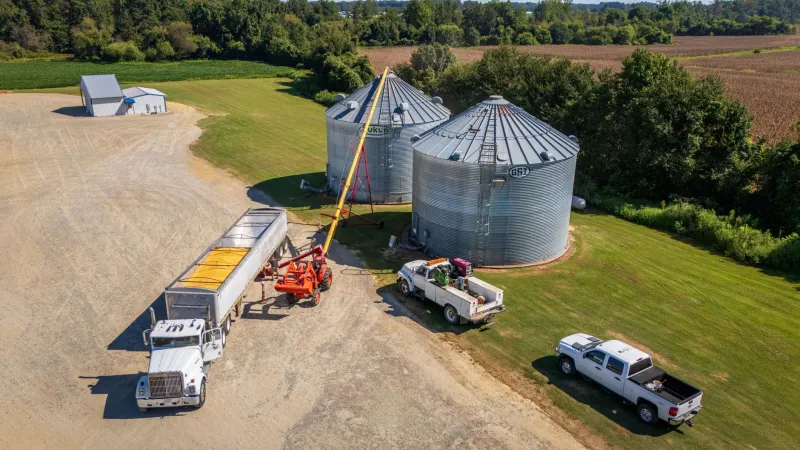
Locked In and Left Behind: How Vertical Integration Is Cornering Independent Farmers—And the Strategies Some Are Using to Break Free

For decades, the promise of a production contract offered American farmers something that felt like security: a guaranteed buyer, a predictable price, and a clear set of expectations. For many independent growers, particularly in poultry, hog, and specialty crop sectors, that arrangement once represented a reasonable trade-off. Today, however, a growing chorus of producers across the country is questioning whether the terms of those agreements have shifted so dramatically that the trade-off no longer holds.
Vertical integration—the process by which large agribusiness corporations absorb successive links in the supply chain, from seed and feed production to processing and retail distribution—has accelerated sharply over the past two decades. The result is a market structure in which a handful of dominant firms exert extraordinary influence over what independent farmers grow, how they grow it, and what they ultimately receive for their labor and investment.
The Anatomy of a Lopsided Contract
At the core of the issue is the structure of modern production contracts, which critics argue are engineered to transfer financial risk downward while concentrating decision-making authority upward. A typical arrangement in the broiler chicken industry, for example, requires a grower to invest hundreds of thousands of dollars in housing infrastructure built to the integrator's precise specifications. The company supplies the chicks, feed, and veterinary inputs—and retains ownership of the birds throughout the production cycle. The farmer, in effect, becomes a service provider operating on land they own but within a system they do not control.
What makes these contracts particularly constraining is the so-called "tournament system," a compensation structure in which growers are ranked against one another and paid based on relative performance rather than fixed rates. Farmers who rank in the lower tiers can see their payments cut significantly, even when external variables—disease outbreaks, feed quality inconsistencies, or regional weather events—are largely responsible for the outcome. The arrangement has drawn sustained scrutiny from agricultural economists and, more recently, from federal regulators.
In 2022, the U.S. Department of Agriculture proposed new rules under the Packers and Stockyards Act that would have provided additional protections for contract poultry and livestock growers, including greater transparency in tournament pay calculations. The rules faced significant industry opposition and have moved through regulatory channels slowly, leaving many farmers in a legal gray zone in the interim.
When Negotiation Becomes Survival
Some producers have chosen not to wait for regulatory relief. In Missouri, a mid-sized hog operation that had been contracted to a major pork integrator for nearly fifteen years reached a critical juncture in 2021 when the company proposed contract revisions that would have required facility upgrades totaling more than $400,000—with no corresponding adjustment to the base payment rate. Rather than accept the new terms or exit the arrangement without a plan, the operation's owners retained an agricultural attorney and entered into a formal renegotiation process.
The outcome was not a dramatic victory, but it was instructive. By documenting the historical performance data from their operation, demonstrating the capital investment already made, and presenting a detailed analysis of comparable market rates in their region, the family was able to negotiate a modest payment increase and a longer contract term that provided greater amortization runway for the required upgrades. The process took eight months and cost several thousand dollars in legal and consulting fees—but the operators estimated it preserved more than $80,000 in annual net income compared to the original revised terms.
Agricultural attorneys who specialize in contract review note that many growers sign or renew agreements without fully understanding the termination clauses, performance benchmarks, or input pricing provisions embedded in the fine print. The power asymmetry between a large integrator's legal department and an individual farm family is substantial, but it is not insurmountable when growers come to the table with documentation, data, and professional support.
Building Revenue Outside the Contract
For others, the more sustainable response has been diversification—deliberately constructing revenue streams that reduce dependence on a single corporate buyer. In the Delmarva Peninsula, historically one of the most contract-intensive poultry production regions in the country, several independent growers have begun allocating a portion of their acreage to direct-market vegetable production, agritourism, and pasture-raised poultry sold through regional food hubs and farmers markets.
The economics of this approach are not simple. Direct-market channels require significant time investment in marketing, customer relationships, and logistics that contract production does not. Profit margins per unit are often higher, but volume is lower and labor demands are greater. For farm families with the bandwidth to manage the complexity, however, the results can be meaningful. One operation in Virginia reported that direct-market sales now account for roughly 30 percent of gross farm income, providing a financial cushion that has allowed the family to negotiate their broiler contract from a position of reduced desperation.
Cooperative structures have also emerged as a countervailing force in some markets. In the upper Midwest, a network of independent grain and specialty crop producers has formed a marketing cooperative that aggregates supply, invests in shared processing infrastructure, and negotiates collectively with buyers—including institutional purchasers such as food manufacturers and regional grocery chains. By presenting a consolidated supply of verified, traceable product, the cooperative has been able to command prices that individual members could not achieve independently.
The Legal Landscape and What's Coming
The broader regulatory environment remains in flux. The Biden administration's USDA made contract transparency and grower protections a stated priority, and while the regulatory process has been slower than advocates hoped, the direction of travel has been toward greater disclosure requirements and limits on certain retaliatory contract termination practices. The 2023 USDA rule on poultry grower pay provided some incremental protections, though industry groups have continued to challenge its scope and implementation.
Agricultural policy analysts note that the effectiveness of federal intervention will depend heavily on enforcement capacity and political continuity—factors that are inherently uncertain. For individual growers, the practical implication is that regulatory relief should be viewed as a potential complement to, rather than a substitute for, farm-level strategy.
Reclaiming the Terms of the Relationship
The farmers who have most successfully navigated the pressures of vertical integration share a common orientation: they treat their relationship with corporate integrators as a business negotiation rather than an inescapable condition. That distinction, while subtle, has material consequences. It means investing in legal and financial counsel, maintaining detailed production records, staying informed about comparable contract terms in their region, and actively exploring alternative channels even when the existing arrangement appears stable.
None of this is easy, and the structural imbalances in concentrated agricultural markets are real and persistent. But the experiences of producers who have renegotiated unfavorable terms, built diversified revenue models, or joined forces through cooperative structures suggest that the range of available responses is wider than it might appear from inside a long-standing contract relationship.
For independent farmers weighing their options, the clearest lesson from those who have found a path forward is also the most straightforward: information is leverage, and leverage is the beginning of autonomy.