Cutting Out the Middleman: How Informal Grain Clubs Are Helping Midwest Farmers Reclaim Their Margins
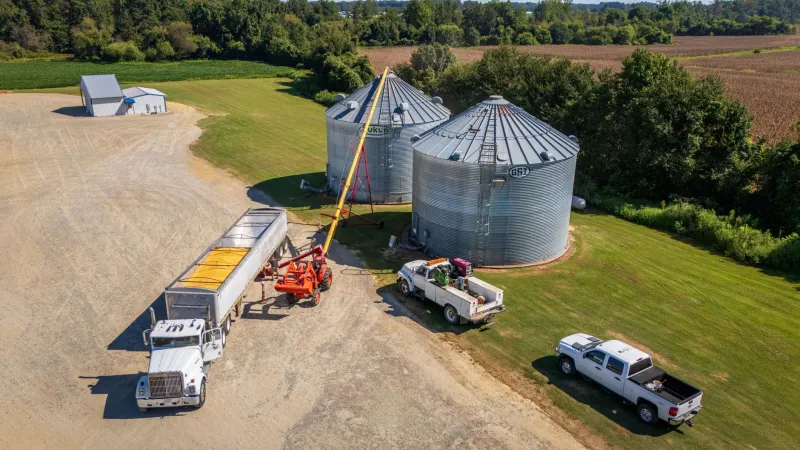
For generations, the local grain elevator has been as much a fixture of rural American life as the county fair or the feed store. But for an increasing number of producers across Illinois, Iowa, Indiana, and beyond, that familiar relationship is being reconsidered — not out of sentiment, but out of arithmetic.
Basis spreads have widened. Handling fees have crept upward. And the spread between what a farmer receives at the elevator and what an end-buyer pays downstream has, in many markets, grown uncomfortable enough to prompt a different kind of question: what if we handled this ourselves?
The answer, for a small but growing cohort of Midwest grain producers, has come in the form of informal farmer-led commodity clubs — loosely organized networks that aggregate production, share storage capacity, and market grain directly to processors, feed manufacturers, and exporters. These are not cooperatives in the legal sense, and they are not corporate consolidations. They are, in many cases, handshake arrangements formalized just enough to function — and they are working.
The Problem These Groups Are Solving
To understand why commodity clubs are gaining traction, it helps to understand the margin pressure that has made the traditional elevator relationship feel increasingly one-sided.
A typical grain elevator earns revenue through multiple channels: the basis — the difference between the local cash price and the futures price — handling fees, storage charges, and in some cases, merchandising spreads. For a farmer delivering corn at harvest, each of those line items represents a reduction in net return. On high-volume, low-margin crops like corn and soybeans, those reductions compound quickly.
At the same time, end-buyers — ethanol plants, soybean processors, livestock feed mills, and export terminals — are often willing to contract directly with suppliers who can guarantee volume, consistency, and logistics reliability. The elevator's value, in theory, is bridging that gap. But when farmers can bridge it themselves, the intermediary cost disappears.
That is precisely the opportunity commodity clubs are designed to capture.
How the Model Works in Practice
The structure of these groups varies considerably, but several common elements appear across successful operations.
First, member farms agree on minimum volume thresholds — typically enough aggregate production to fill a unit train or meet a processor's minimum contract requirement. In corn country, that often means assembling somewhere between 500,000 and 1.5 million bushels across a group of five to fifteen farms.
Second, members either share access to on-farm storage or pool resources to lease additional bin capacity, allowing them to hold grain beyond harvest and sell into stronger seasonal price windows. This element alone can add meaningful cents per bushel to net returns, particularly in years when harvest-time basis is depressed by local supply.
Third — and perhaps most critically — these groups invest in shared market intelligence. Some subscribe to premium grain market data services collectively, splitting costs that would be prohibitive for a single operation. Others designate one member, often with a background in commodities trading or agribusiness, to monitor futures markets, track export demand, and manage direct outreach to potential buyers.
Case Studies From the Field
In central Illinois, a group of eleven corn and soybean producers began meeting informally in 2021, initially to share notes on input costs and agronomic practices. By the following year, they had formalized a grain marketing arrangement, pooling approximately 900,000 bushels of corn for direct sale to a regional ethanol producer. According to members of the group, the arrangement netted an average of $0.18 per bushel more than the local elevator's posted price — a figure that, across their combined volume, represented a meaningful improvement in collective revenue.
In northwestern Iowa, a similar group of nine hog and grain producers leveraged their combined corn production to negotiate a direct feed-grain contract with a large pork integrator in the region. The integrator, seeking supply chain reliability, was willing to pay a modest premium and provide forward pricing certainty in exchange for guaranteed volume and quality specifications. The group now operates under a simple written agreement that outlines volume commitments, quality standards, and a shared logistics protocol for delivery scheduling.
Neither of these groups is incorporated as a cooperative. Neither has filed with a state agricultural agency or taken on debt. They function, in essence, as voluntary marketing alliances — flexible enough to adapt to changing market conditions, but structured enough to be taken seriously by commercial buyers.
What It Takes to Get Started
For farmers considering a similar arrangement, practitioners and agricultural economists offer a consistent set of recommendations.
Start with trust, not paperwork. The most durable commodity clubs are built among producers who already have working relationships — neighbors, members of the same church, participants in the same extension network. Shared values and communication habits matter as much as shared geography.
Define roles early. Successful groups designate a lead negotiator or market manager — someone with the time, temperament, and knowledge to engage directly with buyers and monitor market conditions. This does not need to be a paid position, but it needs to be a clear one.
Invest in storage. The ability to hold grain is the foundation of any direct marketing strategy. Groups that lack adequate on-farm storage capacity should explore leasing arrangements or cost-sharing agreements for bin construction before pursuing direct sales.
Formalize minimally but deliberately. A written memorandum of understanding that addresses volume commitments, quality expectations, cost-sharing for logistics, and a process for resolving disputes is advisable — even among close neighbors. Agricultural attorneys familiar with informal marketing arrangements can help draft simple agreements that protect all parties without creating unnecessary legal complexity.
Engage buyers before harvest. Direct buyers — processors, exporters, feed mills — value planning certainty. Approaching potential buyers in late spring or early summer, with a clear picture of anticipated production and storage capacity, positions a commodity club as a credible, reliable supplier rather than an opportunistic seller.
Limitations and Honest Tradeoffs
The commodity club model is not without its complications. Logistics coordination across multiple farms can be demanding, particularly during compressed planting and harvest windows when attention is already stretched thin. Quality variation across member farms requires careful management to avoid disputes with buyers over load specifications.
There is also the question of basis risk. Elevators, for all their costs, provide liquidity and flexibility that a direct marketing arrangement may not always match. Farmers who need to move grain quickly — due to storage constraints or cash flow needs — may find the direct model less accommodating than a local elevator.
And while the informal structure is part of the model's appeal, it also means that member obligations are only as reliable as the relationships underpinning them. A member who over-commits volume or fails to meet quality standards can jeopardize a group's standing with a buyer — and potentially its ability to renew contracts in subsequent years.
A Structural Shift Worth Watching
None of these limitations are disqualifying. They are, rather, the kinds of operational challenges that any business arrangement requires discipline to manage. And for farmers who are willing to invest that discipline, the commodity club model offers something the traditional elevator relationship rarely does: genuine pricing power.
As direct-to-buyer grain marketing infrastructure — including digital procurement platforms and electronic load-scheduling systems — continues to mature, the logistical barriers that once made these arrangements impractical are steadily diminishing. What once required a phone, a handshake, and a great deal of goodwill now has supporting technology behind it.
For independent grain producers watching their margins compress year after year, the commodity club is not a radical departure from agricultural tradition. It is, in many ways, a return to one — the idea that farmers who work together, share knowledge, and negotiate as a collective are better positioned than those who compete alone. The elevator made that collaboration unnecessary for a long time. A growing number of producers are deciding it is time to rediscover what they were capable of before it arrived.