Full Shelves, Empty Counties: How Farmer Co-ops Are Rebuilding Rural Grocery Access
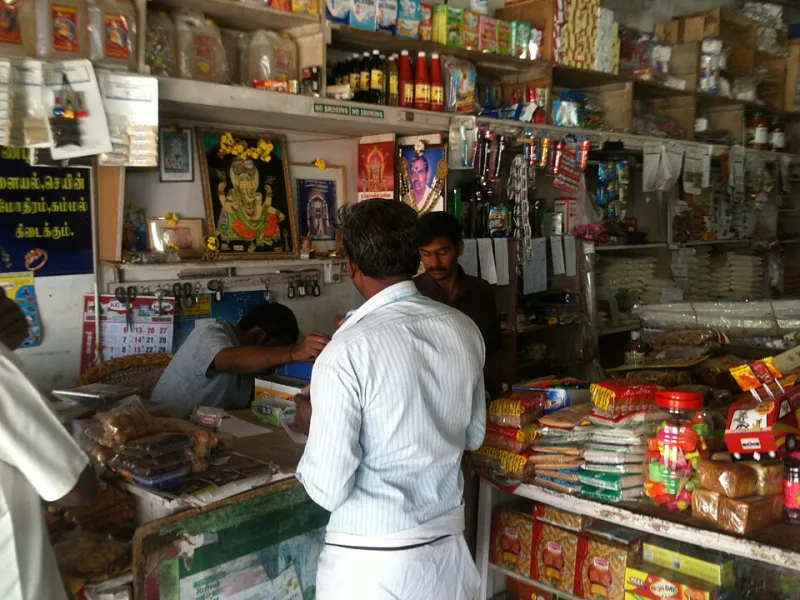
Photo: Ask27, CC BY-SA 3.0, via Wikimedia Commons
When the last full-service grocery store in a rural county closes, the consequences arrive on a predictable schedule. Seniors without transportation begin skipping meals. Local food pantry demand rises. Dollars that once circulated in town now travel to a supercenter forty-five minutes away—and stay there.
Since 2020, hundreds of rural grocery stores across the Great Plains, the Delta, and Appalachia have shut their doors, victims of thin margins, aging owners, and big-box competition. But in a growing number of those counties, a familiar rural institution is stepping into the vacuum: the farmer-owned cooperative.
Why Co-ops Are Uniquely Positioned
Traditional grocery retail depends on volume. A store serving 800 residents cannot match the purchasing power or logistics network of a national chain. A cooperative sidesteps part of that math by collapsing the supply chain. When the co-op's members are also the growers, the store doesn't buy produce—it sources it from shareholders who live ten miles up the road.
Consider the model emerging in parts of Kansas and eastern Colorado, where produce co-ops have opened small-format stores stocking member-grown vegetables, locally processed meats, and staple goods purchased through shared wholesale buying groups. The margin structure differs fundamentally from conventional retail: the community recaptures both the retail markup and the wholesale margin that would otherwise exit the county.
The Federal Money Behind the Movement
Federal programs have accelerated the trend. USDA's Healthy Food Financing Initiative, along with Rural Development loan and grant programs, has directed tens of millions of dollars toward rural food retail infrastructure—coolers, delivery trucks, and critically, cold storage.
That last item deserves emphasis. Cold chain capacity is the hidden bottleneck of rural food systems. A beef producer with a finished animal has no route to local consumers without USDA-inspected processing nearby. A vegetable grower without refrigeration cannot hold inventory for a weekly market. Micro-processing facilities—small-scale meat lockers, shared-use commercial kitchens, packing hubs—are the connective tissue that turns farm output into grocery inventory.
Several states, including Iowa and Minnesota, have layered their own grant programs on top of federal funding, specifically targeting processing infrastructure in grocery-desert counties.
Mobile Markets and the Hub-and-Spoke Model
Where a permanent storefront isn't viable, the mobile market fills the gap. Refrigerated trucks running weekly routes through small towns function as grocery stores on wheels, often accepting SNAP and senior nutrition program benefits. Some co-ops operate the truck as a satellite of a central hub store, extending reach without duplicating overhead.
The economics are unforgiving but workable. Successful mobile operations share common traits: route density planned around existing community anchors—senior centers, clinics, churches—volunteer or shared labor, and produce sourcing timed to member harvests rather than consumer expectations of year-round uniformity.
Selling Your Own Crop to Your Own Neighbors
For the farmers involved, the emotional and financial calculus is unusual. A co-op member might deliver sweet corn to the store in the morning and buy a bag of it that afternoon. The producer captures a wholesale price on the sale and, as a member-owner, a patronage dividend on the store's profit.
It's a closed loop that rural economists have long theorized about: local wealth producing local food, sold locally, with margins recirculating rather than leaking to distant headquarters. The theory is now being tested in real counties with real balance sheets.
What It Takes to Make It Work
The failures are instructive. Co-op grocery projects that launched on community enthusiasm alone—without professional management, realistic volume projections, or grant funding for working capital—have a short shelf life. The operations thriving today share a playbook:
- Professional management from day one, even part-time, even expensive
- A realistic product mix, accepting that staples and household goods drive traffic, not just local produce
- Grant-funded cold chain infrastructure rather than debt-financed equipment
- Member education, so patrons understand that shopping the co-op is itself an act of ownership
For rural communities watching another storefront go dark, the message from these pioneers is measured but hopeful: the market abandoned them, but the supply chain never left. It was parked on their own farms all along.