The 200-Acre Advantage: How Millennial Farmers Are Building Seven-Figure Operations Without Going Industrial
For much of the twentieth century, American agriculture operated under a single dominant directive: get big or get out. Consolidation was treated as inevitable, and the family farm's gradual disappearance was framed as the natural consequence of economic progress. But something unexpected is happening in rural America. A cohort of younger operators—many of them millennials in their late twenties to early forties—is quietly building a counter-narrative, one carefully managed acre at a time.
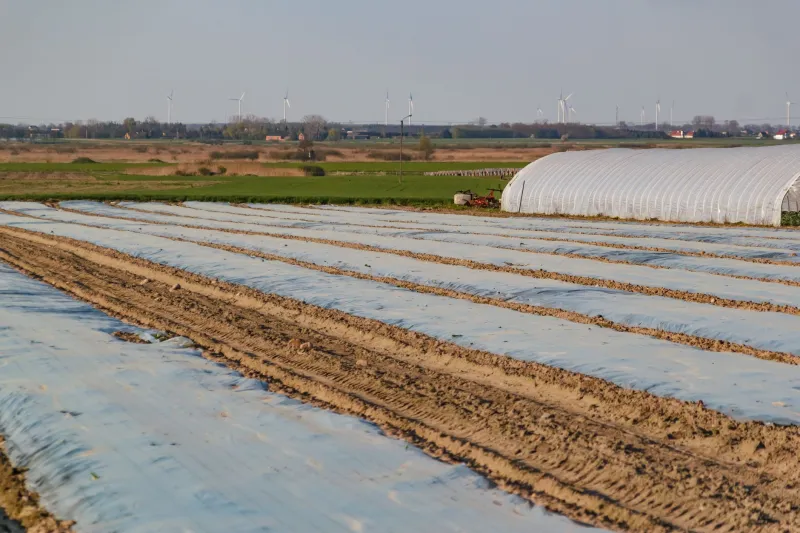
These farmers are not chasing the 5,000-acre corn operation. They are not trying to out-scale the corporate row-crop giants of the Midwest. Instead, they are deliberately targeting what agricultural economists are beginning to call the "mid-sized sweet spot": operations ranging from roughly 150 to 400 acres, designed from the ground up for profitability, operational flexibility, and long-term resilience. And they are doing it with a level of business sophistication that their predecessors rarely had access to.
Rejecting the Industrial Template
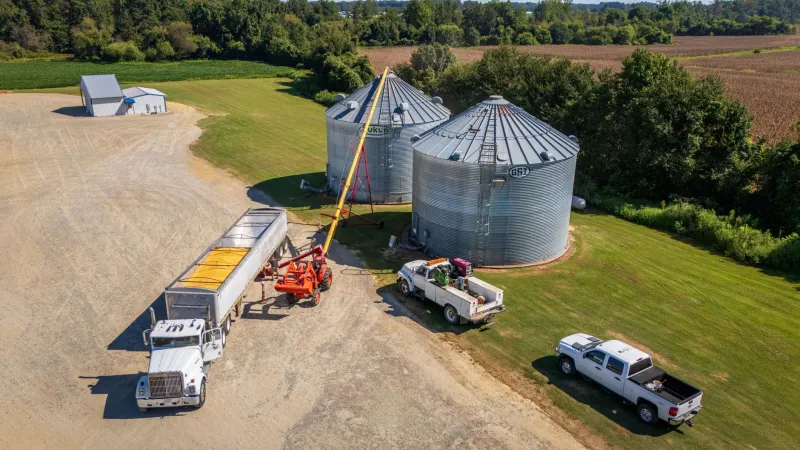
The failure mode of large-scale American agriculture is well documented. Thin commodity margins, heavy debt loads, and exposure to input price volatility have pushed thousands of family operations into bankruptcy over the past three decades. Many of today's younger farmers watched that process unfold firsthand—sometimes in their own families—and drew a pointed conclusion: scale alone is not a strategy.
"My dad farmed 1,800 acres and was always one bad year away from losing everything," said one Iowa-based operator who now runs a 280-acre diversified vegetable and pastured-poultry farm in the Des Moines River corridor. "I wanted a business I could actually control, not one that controlled me."
That sentiment is widely shared among millennial agricultural entrepreneurs. Rather than pursuing volume, they are pursuing margin. Rather than expanding acreage to absorb thin per-unit returns, they are selecting crops, livestock systems, and sales channels that generate substantially higher revenue per acre than commodity benchmarks allow.
Direct-to-Consumer Channels as the Revenue Foundation
Perhaps the most consequential shift separating this generation from its predecessors is the deliberate bypassing of traditional commodity markets. Farmers selling corn or soybeans at the elevator are, by definition, price takers. Farmers selling heirloom tomatoes through a regional CSA subscription, or pasture-raised beef directly to urban consumers via an e-commerce platform, are something closer to price setters.
The infrastructure for this shift has matured considerably over the past decade. Platforms such as FarmMatch, Barn2Door, and a growing ecosystem of regional online farm markets have made it meaningfully easier for small and mid-sized producers to reach end consumers without the logistical burden that once made direct sales impractical at any meaningful scale.
A 220-acre diversified farm in central Virginia, for instance, might generate gross revenues of $800,000 to $1.2 million annually by combining a 400-member CSA program, a direct-ship meat subscription service, and a curated presence at two or three high-traffic urban farmers markets. That same acreage planted in commodity soybeans would generate a fraction of that figure—before accounting for input costs.
The math is not complicated, but executing it requires business skills that agricultural schools are only now beginning to teach systematically.
Precision Agriculture at the Human Scale
One persistent assumption in agricultural technology circles is that precision farming tools deliver their greatest return on investment at large scales, where the cost of sensors, variable-rate applicators, and data management platforms can be spread across thousands of acres. Younger mid-sized operators are pushing back on that assumption with considerable force.
For a 300-acre vegetable and small-grain operation, a soil moisture sensor network paired with a targeted irrigation management platform can reduce water usage by 20 to 30 percent while simultaneously improving yield consistency—outcomes that matter enormously when produce is being sold directly to consumers who expect reliable supply. The per-acre cost of that technology is higher than it would be on a 3,000-acre operation, but the per-acre revenue is also dramatically higher, making the economics workable.
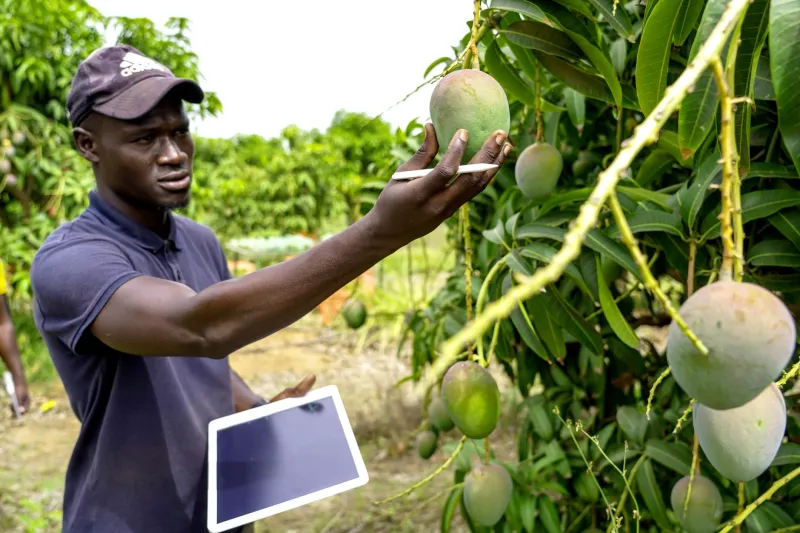
Drone-based crop scouting, tissue sampling programs, and cover crop management software are similarly being adopted at mid-sized operations with increasing frequency. The common thread is selectivity: these farmers are not acquiring technology for its own sake. They are identifying specific operational pain points—pest pressure identification, irrigation timing, soil health monitoring—and deploying tools that address those pain points with measurable precision.
Niche Crop Specialization as Competitive Moat
Commodity markets are, by design, indifferent to the individual producer. Specialty and niche markets are not. A farm that has spent three years building a reputation for a specific heirloom grain variety, a particular heritage breed of pork, or a certified organic produce line has created something that a large commodity operation structurally cannot replicate: a differentiated identity.
Millennial farm operators appear to understand this dynamic intuitively. Across the country, mid-sized operations are increasingly organized around one or two high-value specialty products—Kernza perennial grain in Minnesota, Aleppo peppers in California's Central Valley, pastured Ossabaw hogs in the Carolinas—supported by diversified secondary enterprises that provide cash flow stability.
This specialization strategy also creates natural barriers to competition. A 250-acre farm in upstate New York that has spent five years developing a regional brand around heritage apple varieties and small-batch hard cider is not easily displaced by a larger operator who decides to enter the market. The relationships, the reputation, and the agronomic knowledge are not replicable at speed.
The Work-Life Balance Calculation
It would be incomplete to discuss this generation's approach to farm size without acknowledging the explicit role that personal sustainability plays in their decision-making. Millennial entrepreneurs across all industries have demonstrated a consistent willingness to accept lower absolute income in exchange for greater control over their time and working conditions. Agriculture is no exception.
A 200-acre operation managed with modern efficiency tools and a small, well-compensated team can generate a comfortable livelihood for its owner-operators while remaining genuinely manageable. The 2,000-acre operation, by contrast, often demands a level of physical and financial commitment that leaves little room for anything else—a trade-off that a growing number of younger farmers are explicitly unwilling to make.
This is not a rejection of ambition. It is a redefinition of what agricultural success is supposed to look like.
What the Industry Should Take Seriously
The emergence of a deliberate, business-minded cohort of mid-sized farm operators carries implications that extend well beyond individual success stories. If this model proves durable at scale—and early evidence suggests it is gaining traction—it could meaningfully reshape rural land markets, regional food systems, and the kinds of agricultural infrastructure that communities invest in.
Lenders, extension services, and agricultural policymakers who have spent decades optimizing their programs around large commodity producers may need to recalibrate. The farmer of the next generation may not be asking for help financing 10,000 acres of row crops. They may be asking for help building a cold-storage facility, launching a subscription fulfillment operation, or accessing capital for a high-tunnel vegetable expansion.
America's agricultural future has rarely looked less like a straight line. The millennial farmstead is not a nostalgic throwback to the family farm of the 1950s. It is something genuinely new: a precision-managed, market-connected, deliberately scaled enterprise built for a food system that is still very much in formation.