Margins in Bloom: How Native Wildflower Strips Are Becoming a Legitimate Revenue Line for American Farmers
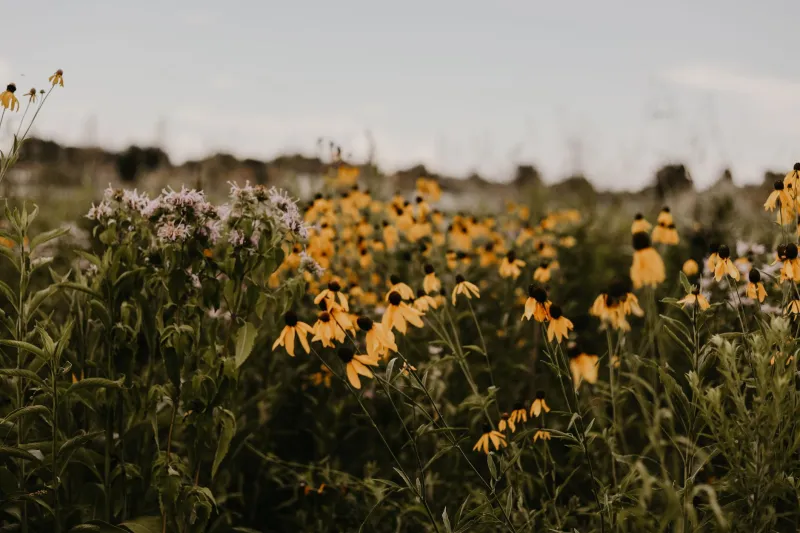
For decades, the strips of rough ground bordering fence lines, drainage ditches, and field edges were treated as operational afterthoughts—land too narrow, too rocky, or too wet to plant, yet too present to ignore on a balance sheet. Today, a cohort of forward-thinking farmers is reframing those acres entirely. By installing managed native wildflower corridors, they are attracting a surprisingly diverse set of paying partners: seed producers, nonprofit conservation groups, pollinator health researchers, and agritourism visitors willing to pay for the experience of walking through a working landscape in full color.
The economics are not hypothetical. They are being built, tested, and refined on real farms across Illinois, Ohio, Pennsylvania, and the Carolinas—and the numbers are beginning to speak for themselves.
What the Market Is Actually Paying For
The revenue streams attached to wildflower corridors fall into four broad categories, each with distinct contracting structures and timelines.
The most established channel is seed production contracting. Regional and national native seed companies face persistent supply constraints for species like purple coneflower, black-eyed Susan, wild bergamot, and partridge pea. Farmers who establish certified-clean production strips can negotiate per-pound harvest agreements, with prices ranging from $8 to over $40 per pound depending on species scarcity and certification status. A well-managed half-acre strip producing a high-demand species can generate $1,200 to $3,500 annually once the planting matures—typically in years two or three.
The second stream comes from conservation program payments. USDA's Conservation Reserve Program (CRP) and its companion initiative, the Conservation Reserve Enhancement Program (CREP), offer annual rental payments for land enrolled in pollinator habitat practices. Practice CP-42, specifically designed for pollinator habitat, provides payment rates that vary by county but frequently exceed the agricultural rental value of the marginal ground being enrolled. Farmers in high-priority watersheds can layer state cost-share programs on top of federal payments, sometimes covering 75 percent or more of establishment costs.
Third, and increasingly relevant in peri-urban and tourist-adjacent regions, is agritourism monetization. Farms near population centers have begun charging for wildflower walk experiences, photography sessions, and seasonal cutting-garden subscriptions that give members the right to harvest bouquets from designated strips. While this model requires more direct customer engagement than seed contracting, gross revenues of $4,000 to $12,000 per season have been reported by operations in states like Virginia, Michigan, and Colorado—often from corridors spanning fewer than two acres.
Finally, a smaller but growing group of farmers is entering pollinator research partnerships with universities and private companies developing next-generation biologicals and crop inputs. These arrangements typically involve monitoring agreements, data sharing, and modest per-acre stipends in exchange for access to established, diverse floral habitat.
The Implementation Timeline: What Farmers Should Expect
One of the most common miscalculations new entrants make is underestimating the establishment window. Native wildflower plantings are not annual crops. Many species require cold stratification to germinate, and competitive weed pressure in the first season can set a planting back significantly if site preparation is inadequate.
Experienced practitioners recommend a phased approach. In year one, the priority is site preparation: suppressing existing vegetation through tillage, herbicide application, or solarization, followed by a fall seeding of a regionally appropriate native mix. Year two typically brings patchy, uneven establishment with moderate weed competition. By year three, a well-managed corridor begins to express its full diversity, and seed harvest or agritourism programming becomes viable.
Total establishment costs—including seed, site prep, and any required fencing—generally fall between $800 and $1,800 per acre, depending on region and seed mix complexity. USDA cost-share programs can offset a substantial portion of this outlay, but farmers should plan for a 24-to-36-month runway before the corridor reaches peak productivity.
Balancing Conservation Aesthetics With Operational Reality
One tension that surfaces repeatedly in conversations with participating farmers is the gap between what conservation partners expect a wildflower corridor to look like and what a working farm operation can realistically maintain.
Conservation easement holders and nonprofit partners often emphasize species diversity, structural complexity, and minimal disturbance. Farmers, meanwhile, need corridors that can be mowed, harvested, or spot-treated without triggering contract violations or losing certification status. Negotiating these boundaries upfront—before signing any agreement—is consistently cited as the most important early-stage decision a farmer can make.
Several operations have resolved this tension by designating distinct zones within a single corridor: a seed production block managed for harvestable yield, a conservation block managed for habitat quality, and a buffer zone that serves both functions. This spatial zoning approach allows farmers to satisfy multiple contract requirements simultaneously without compromising any individual revenue stream.
Who Is Making This Work—and Where
The farms finding the most consistent success with wildflower corridor programs share a few common characteristics. They tend to have between 200 and 800 total acres under management, with five to fifteen percent of that acreage classified as marginal or transitional. They have existing relationships with USDA Farm Service Agency staff, which accelerates CRP enrollment. And they are located within reasonable proximity to either a regional seed company with native species contracts or a population center large enough to support agritourism traffic.
Operations in the Corn Belt have leaned most heavily on the seed production and conservation payment models, where scale and established infrastructure make contracting straightforward. Farms in the Mid-Atlantic and Southeast have found agritourism more lucrative, particularly when wildflower corridors are positioned as part of a broader farm experience that includes other direct-market products.
In the Pacific Northwest, early movers are partnering with wine and specialty crop producers who need managed pollinator habitat to support on-farm production—creating a B2B contracting model that sidesteps the public-facing complexity of agritourism entirely.
The Broader Case for Taking Marginal Ground Seriously
The wildflower corridor model is not a replacement for commodity production. It is, rather, a disciplined approach to extracting value from acres that were already underperforming—land that was generating little revenue while still incurring property tax liability, fence maintenance costs, and management overhead.
For farmers operating on thin margins, the ability to convert even five or ten acres of edge ground into a functioning revenue center—one that simultaneously improves on-farm pollinator populations and strengthens relationships with conservation-minded buyers—represents a meaningful shift in how the total farm portfolio is managed.
The field is not simply a production unit. It is a landscape with multiple layers of value, some of which have been left unclaimed for too long. The farmers currently monetizing their wildflower corridors are not abandoning agricultural discipline. They are extending it into terrain that the industry has historically overlooked.
In that sense, what is blooming along those fence lines is not just native flora. It is a more complete understanding of what a farm can be.