Logging Off at Sunrise: The Quiet Rebellion Against Always-On Farming
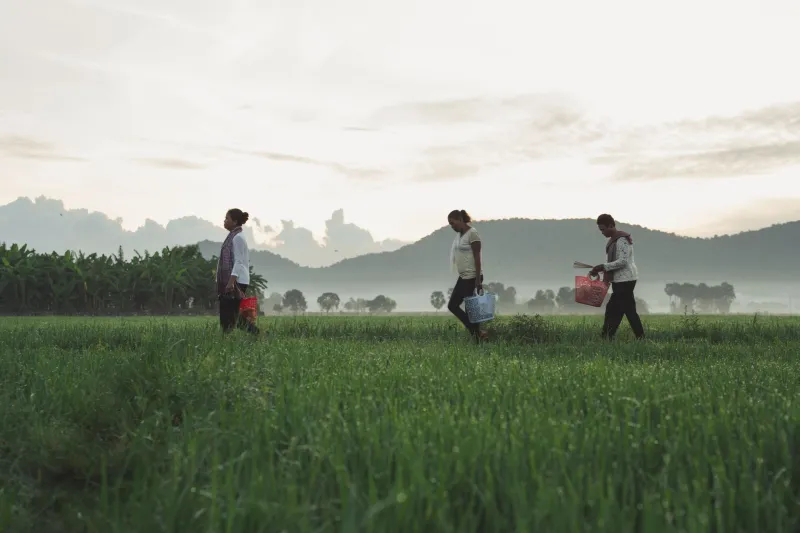
The irrigation pivot is managed by an app. The grain dryer texts when it's done. The calves wear ear tags that report to a cloud server somewhere in another time zone. And somewhere in the farmhouse kitchen, a phone lights up at 4 a.m. because a soil moisture sensor two miles out wants to be acknowledged.
For a growing number of American farm families, this is the breaking point—not of equipment, but of patience. A quiet counter-movement is taking shape across the Corn Belt, the High Plains, and the dairy valleys of Wisconsin and Vermont: operators who have embraced precision agriculture to the hilt and are now deliberately, sometimes awkwardly, powering it down.
The Alert Fatigue Nobody Puts in the Budget
Precision ag adoption has been one of the great efficiency stories of the past decade. Sensors trim input costs, drones catch disease pressure early, and automated records make crop insurance and lender conversations easier. Few would trade it back.
But the human cost rarely shows up on a balance sheet. Extension researchers in several Midwest states have begun documenting what they loosely call alert fatigue—chronic low-grade stress from constant notifications, decision fatigue from dashboards that never sleep, and the erosion of the natural pauses that farm work once provided.
Dr. Ellen Marchetti, a rural mental health specialist who works with farm families in Iowa and Nebraska, describes the pattern plainly. "The older generation worked sunrise to sunset, but the work ended. You could see the end of it. Now the work is invisible and endless. The combine is parked, but the business never clocks out."
The Digital Sabbath, Farm Edition
The responses vary. Some families institute a hard rule: no agtech notifications between 9 p.m. and 6 a.m., with failsafes—alarms, moisture thresholds, barn cameras—configured to break through only in genuine emergencies. Others go further, declaring Sunday a full connectivity shutdown, a practice borrowed from religious tradition and secular tech culture alike.
The logistical challenges are real. A hog operation with automated ventilation cannot simply go dark. A dairy running robots around the clock cannot pretend the data stream doesn't exist. What these families are discovering is that boundaries don't require disconnection from machinery—only from the compulsion to monitor it constantly.
One central Illinois grain farmer, who asked not to be named because his landlord reads the same trade publications, put it this way: "The system will tell me if something's actually wrong. It doesn't need me watching it be right all night."
Family Friction at the Kitchen Table
The tension often runs along generational lines. Younger operators, who built the digital stack, sometimes resent being asked to unplug from tools they see as competitive advantages. Parents and spouses, meanwhile, describe the phone-on-the-table phenomenon—the operator physically present but mentally scrolling yield maps during dinner.
Labor dynamics complicate things further. On many family operations, the person managing the apps is also the person milking, hauling, and bookkeeping. When the office follows you into the tractor cab and the cab follows you into the house, there is no shift change.
Some operations are treating the problem structurally rather than individually: designated on-call rotations for after-hours alerts, written protocols defining what constitutes an emergency, and even hiring part-time remote monitors—rural America's version of a night watchman.
Why Sustainability Includes the Operator
The framing matters. Soil health, water conservation, and rotational diversity are all recognized pillars of sustainable farming. Increasingly, advocates argue that operator wellbeing belongs on the same list. An exhausted, perpetually distracted decision-maker makes worse agronomic choices, misses equipment warnings, and—statistically—is more likely to be involved in a farm accident.
Rural stress hotlines and state-level farm crisis programs have seen call volumes rise in recent years, and while connectivity is only one stressor among many—weather, prices, debt—it is one of the newest and least examined.
Old Rhythms, New Rules
There is something almost humorous about the scene: a farmer standing in a field that monitors itself, checking a weather app while ignoring the sunset. But the underlying question is serious. Technology was supposed to give farmers back their time. Whether it actually does depends less on the software than on the boundaries drawn around it.
The families making this work share a common insight: the off switch is a management decision, like crop rotation or loan terms. It requires planning, communication, and the willingness to accept that some alerts will wait until morning.
The land has always demanded attention. It has never before demanded a response time.