Traceability as a Business Strategy: How Small and Mid-Sized Farms Are Using Digital Supply Chains to Command Premium Prices
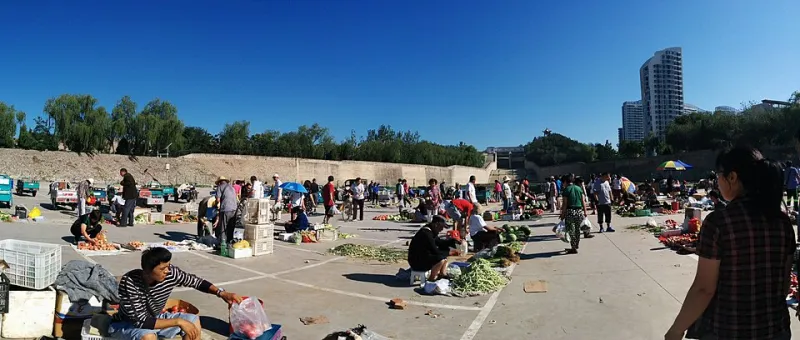
Photo: Leugen9001, CC BY-SA 4.0, via Wikimedia Commons
There is a version of the American food economy that most consumers never see: a long, opaque chain of intermediaries — brokers, aggregators, distributors, and wholesalers — through which agricultural commodities pass before reaching a plate. At each link in that chain, value is extracted. By the time a heritage breed pork chop or a heirloom tomato reaches a restaurant or grocery shelf, the farmer who produced it may have captured only a fraction of what the end consumer paid.
That model is being disrupted — not by regulatory reform or market consolidation, but by technology and transparency. A growing cohort of rural entrepreneurs across the United States is using digital tools to compress the supply chain, verify the provenance of their products, and speak directly to buyers who are willing to pay a meaningful premium for the assurance of knowing exactly where their food came from.
The tools enabling this shift range from blockchain-based traceability platforms to farm-to-table certification programs to direct-to-consumer e-commerce infrastructure. None of them are magic. All of them require investment, learning, and sustained commitment. But for operations positioned correctly, the financial returns are substantial.
Why Provenance Has Become a Premium Product
The demand side of this equation is well-documented. Consumer research conducted by organizations including the Food Marketing Institute and the International Food Information Council consistently shows that a significant share of American food buyers — particularly in higher-income demographics — place material value on knowing the origin of what they purchase. Attributes such as non-GMO status, pasture-raised certification, regional sourcing, and heritage breed designation command measurable price premiums across retail and foodservice channels.
The challenge, historically, has been verification. Claims made on a label are only as credible as the system behind them, and that system has often been either absent or inaccessible to smaller producers who lacked the resources to pursue rigorous certification or the distribution relationships to reach premium-paying buyers.
Digital supply chain tools are changing both of those constraints simultaneously.
Blockchain in the Barn: What It Actually Means for Farmers
Blockchain technology — the distributed ledger system most commonly associated with cryptocurrency — has found a practical agricultural application in product traceability. At its core, a blockchain-based traceability system creates an immutable, time-stamped record of a product's journey from production through processing and distribution to the point of sale. Each entry in the chain is verifiable and tamper-resistant, which means the provenance claim attached to a product carries a level of credibility that a simple label cannot match.
For farmers producing specialty or heritage crops, this matters in concrete ways. A producer of grass-finished beef in the Flint Hills of Kansas, for instance, can use a platform such as IBM Food Trust, TE-FOOD, or the agriculture-focused Ripe.io to record and timestamp every significant event in their production process — from calving records and pasture rotation logs to processing facility data and shipping documentation. That record becomes accessible to wholesale buyers, retail partners, or end consumers via a QR code on the product packaging.
The cost of entry varies by platform and operation size. Basic implementation on some platforms can run as low as $500 to $2,000 in initial setup, with ongoing subscription or transaction fees. More comprehensive integrations — particularly those connecting to existing farm management software or requiring hardware such as RFID tagging infrastructure — can push initial investment into the $10,000 to $30,000 range for a mid-sized operation.
The return on that investment depends heavily on whether the producer has, or can develop, market relationships where provenance documentation is valued. Farmers who attempt to implement traceability technology without a corresponding market strategy often find that the system generates data no one is paying them to produce.
Case Studies: Producers Who Made It Work
Heritage grain in the Northern Plains. A wheat and emmer producer in Montana began working with a regional specialty grain aggregator that required blockchain-verified origin documentation as a condition of its premium pricing contract. The farm invested approximately $8,000 in a traceability platform integration over two seasons. The premium received — roughly $2.50 per bushel above conventional wheat prices — generated enough additional revenue within 18 months to recover the technology investment and contribute meaningfully to the operation's overall margin.
Pasture-raised poultry in the Mid-Atlantic. A family operation in Virginia producing certified pasture-raised heritage breed chickens built a direct-to-consumer subscription model using a combination of Shopify-based e-commerce infrastructure, a USDA Process Verified Program designation, and a social media content strategy that documented production practices in real time. By eliminating the wholesale distributor from their sales channel, the operation increased its net revenue per bird by approximately 35 percent. The learning curve — particularly around logistics for cold-chain direct shipment — was significant, and the founders estimate it took two full production cycles before the model operated efficiently.
Specialty produce in the Southeast. A vegetable operation in North Carolina growing heirloom tomato and pepper varieties for regional restaurant accounts used a farm-to-table certification through the Appalachian Grown program, combined with a producer profile on the Good Food Merchant platform, to develop relationships with six independent restaurants willing to pay a 20 to 40 percent premium over wholesale commodity pricing. The certification process required documentation of growing practices and a farm audit, but no blockchain infrastructure. For this operation, the certification pathway proved more cost-effective than a full technology implementation given their scale and market channel.
The Certification Landscape: Matching the Tool to the Market
One of the most important strategic decisions facing producers considering this path is determining which credentialing or verification mechanism aligns with their target market. Not every premium buyer requires blockchain-level verification. Some restaurant and retail buyers respond primarily to third-party certification programs, regional brand designations, or personal farm relationships.
Relevant certification frameworks for US producers include USDA Organic, Non-GMO Project Verified, Animal Welfare Approved, American Grassfed Association certification, and various state-level regional food brand programs. Each carries different cost structures, documentation requirements, and market recognition profiles.
Blockchain traceability adds a layer of verification on top of these frameworks — or can stand independently for buyers who prioritize transparency over formal certification. The decision about which approach to pursue should be driven by a clear-eyed assessment of who your buyer is and what form of verification they find credible and valuable.
A Practical Starting Point
For farm operators considering entering this space, practitioners and agricultural business consultants generally recommend a sequenced approach rather than a simultaneous technology and market development effort.
Begin by identifying your target buyer segment and conducting direct conversations about what verification or transparency attributes they value and what premium they are prepared to pay. This market intelligence should precede any technology investment. Once a viable buyer relationship or market channel is confirmed, evaluate the minimum viable technology or certification pathway that satisfies that buyer's requirements. Build operational competency in documentation and digital communication before scaling. And engage with your state's agricultural development office or land-grant extension service, many of which now offer resources specifically focused on specialty crop market development and supply chain digitization.
The infrastructure connecting American farms to premium markets has never been more accessible. The producers capturing the most value from it are not necessarily the largest or the most technologically sophisticated — they are the ones who understood their market first and built their systems around it.