Growing Up, Not Out: What Vertical Farming's Midwest Expansion Means for Traditional Producers
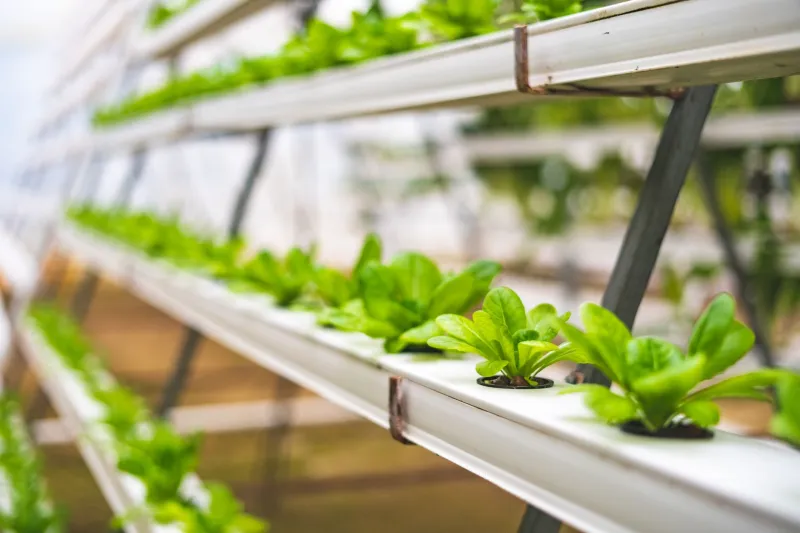
Drive through central Illinois or the outer suburbs of Kansas City and you are unlikely to mistake the landscape for anything other than what it has always been — row crop country, defined by flat horizons, grain bins, and the reassuring geometry of planted fields. Yet quietly, in converted warehouses, repurposed industrial buildings, and purpose-built facilities, a different kind of agriculture is taking root in these same communities.
Controlled-environment agriculture — and its most vertically ambitious subset, indoor vertical farming — has moved beyond the coastal innovation corridors where it first attracted venture capital and media attention. It is now appearing with increasing frequency in the geographic center of American food production, prompting a question that carries real economic weight for the region: is this a complementary evolution of the agricultural system, or a disruptive force that conventional producers should regard with genuine concern?
What Vertical Farming Actually Involves
For those encountering the term outside of a technology context, vertical farming refers to the practice of cultivating crops in stacked, indoor growing systems under artificial lighting, with precisely controlled temperature, humidity, CO₂ levels, and nutrient delivery. Most commercial operations rely on either hydroponic or aeroponic systems, eliminating soil from the production equation entirely.
The crops best suited to this model — leafy greens, herbs, microgreens, and select fruiting vegetables — are not the commodity staples that define Midwest agriculture. Corn, soybeans, and wheat are not candidates for vertical production at any economically rational scale. This distinction is fundamental to understanding where vertical farming intersects with, and where it diverges from, the existing agricultural economy of the region.
"We are not competing with the corn farmer down the road," said Marcus Ellery, co-founder of a vertical operation that opened in suburban Columbus, Ohio in early 2023. "Our customer is the grocery distribution center that currently sources baby spinach from California or Arizona. We're trying to shorten that supply chain by about 1,800 miles."
That supply chain argument is the central commercial thesis driving Midwest vertical farm investment — and it is not without merit.
The Supply Chain Case for Heartland CEA
The United States imports a substantial volume of fresh produce from the Southwest and from Mexico, shipping perishable goods across thousands of miles before they reach Midwest consumers. Transit time degrades quality, increases food safety risk, and introduces logistical vulnerabilities that became acutely visible during pandemic-era supply chain disruptions.
A vertical farm situated within 50 to 100 miles of a major Midwest distribution hub can, in theory, deliver fresher product with a longer shelf life and a more predictable supply schedule. For grocery retailers and foodservice operators who experienced the instability of extended supply chains, the local sourcing proposition carries genuine appeal.
Several large-format retailers operating in the region have signed offtake agreements with Midwest vertical farms in recent years, providing the revenue visibility that lenders and investors require. These agreements represent a meaningful validation of the commercial model — though they also concentrate risk, since the loss of a single anchor customer can destabilize an operation's entire financial structure.
The Cost Structure Problem
For all its conceptual appeal, vertical farming carries a capital and operating cost burden that has proven difficult to overcome at scale. Energy consumption is the most significant variable. Replacing sunlight with LED arrays across multiple growing levels requires substantial electrical infrastructure, and electricity costs can represent 25 to 40 percent of total operating expenses depending on local utility rates and growing system design.
The Midwest offers a partial advantage here: electricity rates in states like Indiana, Ohio, and Missouri are generally lower than on the coasts, and proximity to renewable energy generation — particularly wind — creates potential for cost mitigation over time. Several operations have pursued power purchase agreements with renewable providers as part of their long-term cost management strategy.
Startup capital requirements remain formidable regardless of geography. A mid-scale commercial vertical facility — roughly 50,000 to 100,000 square feet of growing space — typically requires $10 million to $30 million in initial investment before the first harvest occurs. Equipment, climate control systems, lighting infrastructure, and automation technology account for the bulk of that figure.
"The technology works. That's not the question anymore," noted Dr. Patricia Wren, an agricultural economist at Purdue University who studies CEA economics. "The question is whether the unit economics can support debt service and investor returns at the same time. That's where a number of high-profile operations have struggled."
Her observation references a string of high-profile vertical farm collapses and restructurings that occurred between 2022 and 2024, including the bankruptcy filings of several well-capitalized national operators. Those failures have introduced appropriate caution into the sector without invalidating the underlying model.
Regulatory and Workforce Dimensions
Operating a vertical farm in a Midwest state involves navigating a regulatory environment that was largely designed with conventional agriculture in mind. Food safety certifications, water use permits, wastewater discharge regulations, and zoning classifications for agricultural versus industrial use can vary significantly by county and municipality.
Entrepreneurs entering the space frequently report that local regulatory bodies are willing but unprepared — eager to support economic development but lacking clear frameworks for evaluating operations that don't fit existing categories. Early engagement with state departments of agriculture and local planning authorities is strongly recommended before site selection is finalized.
Workforce considerations present a different kind of challenge. Vertical farming requires a blend of horticultural knowledge, mechanical aptitude, and data literacy that does not map neatly onto either traditional farm labor pools or conventional manufacturing workforces. Community colleges in several Midwest states have begun developing certificate programs in controlled-environment agriculture, but the pipeline remains thin relative to industry demand.
What Conventional Farmers Should Monitor
For producers whose operations focus on commodity grains and oilseeds, vertical farming's immediate competitive implications are minimal. The crop categories do not overlap in any meaningful way at current technology levels.
The more relevant consideration for conventional producers may be the indirect effects: shifts in how food retailers position local and regional sourcing, changes in land use patterns near urban centers, and the potential emergence of new agricultural service businesses — from specialized input suppliers to technical maintenance providers — that could represent diversification opportunities for rural entrepreneurs.
Some conventional producers have begun exploring whether greenhouse or CEA components could complement their existing operations — particularly in the context of direct marketing, agritourism, or specialty crop production. These hybrid approaches carry their own complexity but may represent a more accessible entry point than a full-scale vertical facility.
A Technology in Transition
Vertical farming in the American Midwest is neither the silver bullet that early boosters proclaimed nor the inevitable failure that skeptics predicted following the sector's turbulent mid-decade shakeout. It is, more accurately, a technology and business model in the process of finding its appropriate scale, market fit, and geographic logic.
For the Midwest, that process is unfolding in real time — in warehouses outside Des Moines, in retrofitted facilities near Detroit, and in purpose-built structures adjacent to distribution corridors in the Ohio Valley. Whether those operations mature into a durable component of the regional food system will depend on energy economics, consumer demand for local produce, and the ability of operators to build financially sustainable enterprises rather than simply technologically impressive ones.
The field, in this case, happens to be indoors. But the fundamental agricultural questions — about margins, markets, and the long game — remain exactly the same.