The Town That Bought Into the Farm: Municipal Equity Stakes and the New Economics of Rural Ownership
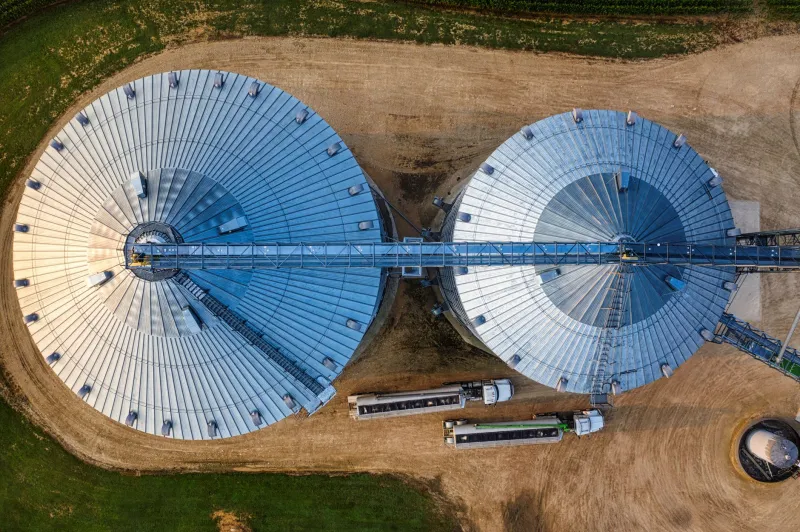
In a small county seat in central Iowa, the local economic development authority recently completed a transaction that would have seemed improbable a decade ago. Using a combination of municipal reserve funds and a pooled investment vehicle structured for local residents, the authority acquired a fifteen percent equity stake in a third-generation grain and livestock operation on the county's eastern edge. The farm continues to be managed entirely by its founding family. But a portion of its profits now flows back into a community fund rather than leaving the region through absentee ownership or corporate consolidation.
This arrangement is not yet common. But it is no longer isolated. Across rural America, a growing number of municipalities, community development financial institutions, and locally organized investment groups are exploring similar structures—acquiring minority positions in established farm operations as a strategy for keeping agricultural wealth circulating within the communities that depend on it.
The Problem These Structures Are Trying to Solve
The economic logic behind community farm investment begins with a straightforward observation: agricultural land and the operations that run on it generate substantial value, but an increasing share of that value exits rural communities almost immediately. Absentee landlords collect rents that are spent elsewhere. Corporate input suppliers and processors capture margins that once supported local businesses. Even successful family operations, when they eventually sell or transfer, frequently attract buyers from outside the region.
The result, documented in decades of rural economic research, is a hollowing out of local commerce. Farm income that might have supported a hardware store, a veterinary practice, or a local bank instead contributes to the balance sheets of entities with no particular stake in the community's survival.
Community equity investment in farms attempts to interrupt that cycle. By acquiring a stake in an operation before it reaches a transition or sale event, a community entity can establish a claim on future profits—and, in some structures, a degree of influence over how and to whom the operation is eventually transferred.
How the Legal Structures Work
The legal architecture for these arrangements varies considerably, reflecting the different priorities and constraints of the communities pursuing them. Several models have emerged as practical frameworks.
The most straightforward involves a direct equity purchase through a limited liability company or limited partnership structure. The community entity—whether a municipal development authority, a community land trust, or a locally organized investment cooperative—contributes capital in exchange for a defined ownership percentage. Governance rights are negotiated as part of the transaction, with most arrangements granting the community partner observer status or a single advisory board seat rather than operational control.
A second model uses a community investment note, a debt instrument that converts to equity under specified conditions. This approach is particularly useful when a farm family is willing to accept outside capital but hesitant to formalize an ownership relationship immediately. The note provides liquidity for the operation while preserving optionality for both parties.
More complex structures have been developed in collaboration with community development financial institutions, which bring regulatory familiarity and access to federal programs that can reduce the effective cost of capital for rural investment funds. Some of these arrangements have qualified for New Markets Tax Credits or USDA Rural Development financing, meaningfully improving their economics.
The Farmer's Perspective
For the farm families at the center of these transactions, the calculus is neither simple nor uniform. The appeal of outside capital—particularly for operations navigating succession, equipment investment, or land acquisition—is real. Many farm families face precisely the kind of capital constraint that community investment can address, and they face it without access to the private equity relationships that larger agricultural enterprises enjoy.
But the concerns are equally genuine. Farming families have spent generations building operational autonomy, and the prospect of sharing ownership with a municipal entity or community board introduces governance dynamics that feel foreign to many operators. Questions about decision-making authority, profit distribution timing, and exit rights require careful negotiation and clear documentation.
Attorneys who specialize in agricultural transactions report that the most successful community investment arrangements are those where expectations are established in exhaustive detail before closing. Ambiguity about how profits will be distributed, how disputes will be resolved, and under what conditions either party can exit the structure has derailed several promising deals in their early stages.
Farm families who have completed these transactions generally describe a period of adjustment followed by a working relationship that feels less intrusive than they initially anticipated. In most operational structures, the community partner's day-to-day presence is minimal. The relationship becomes consequential primarily at annual reporting periods and when major strategic decisions—a land purchase, a crop mix change, a generational transfer—are under consideration.
Community Benefits Beyond the Balance Sheet
The financial return on community farm investment is, by most accounts, modest relative to alternative uses of municipal capital. Agricultural operations do not generate the yield that commercial real estate or diversified equity portfolios might offer. The case for community investment in farms rests primarily on non-financial returns: employment preservation, land stewardship continuity, supply chain resilience for locally oriented food systems, and the social stability that comes from keeping productive land in the hands of people with long-term ties to the region.
Several communities have framed their investments explicitly in those terms, presenting them to residents not as profit-seeking ventures but as economic infrastructure—comparable in logic, if not in form, to a municipal investment in a water system or a broadband network. The farm is understood as a community asset whose continued independent operation provides value that extends well beyond its direct financial output.
Local food system advocates have noted a secondary benefit: community investment structures often come with informal expectations about market relationships. Farms with community stakeholders are more likely to participate in local procurement programs, school food initiatives, and regional distribution networks—not because the investment agreement requires it, but because the social context of shared ownership creates aligned incentives.
Tensions That Remain
The model is not without its critics. Some agricultural economists argue that community investment in individual farms misallocates public resources, providing a subsidy to specific families rather than addressing the structural conditions—land prices, input costs, market concentration—that create rural economic fragility in the first place.
Others raise concerns about the precedent these structures set for farm autonomy. Even minority ownership positions carry legal rights that can constrain an operator's flexibility, and the history of well-intentioned outside involvement in agricultural operations is not uniformly positive.
Family farm advocacy organizations have urged caution, recommending that any community investment arrangement be reviewed by independent legal counsel with specific expertise in agricultural law before execution. The complexity of these structures, they note, creates meaningful risk for farm families who enter them without adequate preparation.
Those cautions notwithstanding, the trend appears durable. As rural communities confront the accelerating consolidation of agricultural land and the economic consequences that follow, the appeal of structures that keep ownership local—even partially—is likely to grow. The town that bought into the farm may be an early outlier. It may also be a preview.