Held Hostage by the Dashboard: How Agtech Subscription Models Are Squeezing the Operators Who Adopted Them First
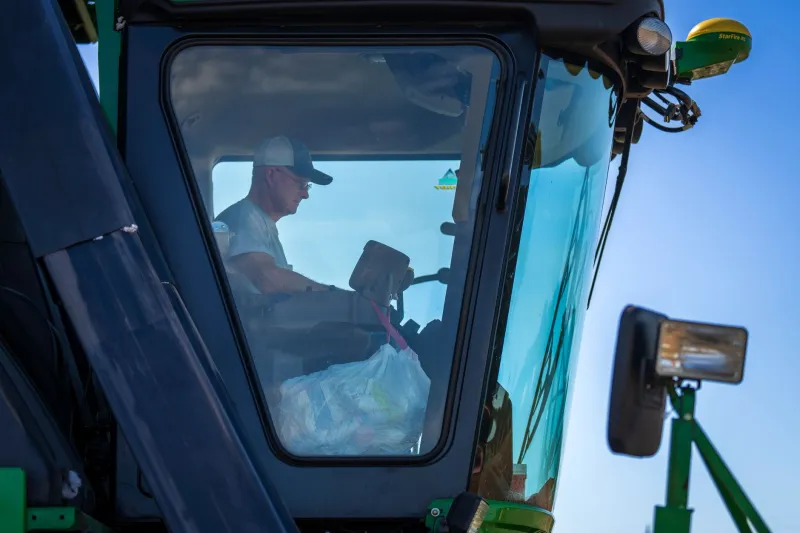
For a generation of American farmers, the promise of precision agriculture arrived wrapped in sleek user interfaces and compelling sales pitches. Subscribe to the platform, the pitch went, and gain real-time visibility into soil conditions, equipment diagnostics, and yield projections. Across the Corn Belt and the High Plains, thousands of operators signed on. Now, several years into those relationships, many are discovering that the subscription was never quite what it seemed.
Renewal notices are arriving with price increases that outpace inflation. Diagnostic data generated by a farmer's own equipment is locked behind proprietary portals. And when an operator tries to migrate that data to a competing platform, they often find it formatted in ways that render it functionally useless elsewhere. What was marketed as a productivity tool has, for many, become a financial obligation with no obvious off-ramp.
The Architecture of Dependency
The mechanics of vendor lock-in in agricultural technology are not accidental. They are, by most accounts, deliberate design choices. Large equipment manufacturers and independent software developers alike have built ecosystems where individual components—field mapping tools, seed recommendation engines, telematics dashboards—function best, or exclusively, within a single vendor's environment.
A farmer running a major brand's tractor line may find that full diagnostic capability requires a subscription to that manufacturer's proprietary software suite. Canceling the subscription does not merely limit convenience; in some cases, it disables core functions the operator has come to depend on for daily operations. The equipment itself, which the farmer owns outright, becomes partially inoperable without the ongoing license fee.
Independent agronomists have begun documenting these friction points in detail. In surveys conducted by several land-grant university extension programs over the past two years, a recurring complaint has emerged: farmers feel they are paying perpetually for access to data they themselves produced. Soil readings, yield maps, application records—all of it flows through vendor servers, where it is stored, analyzed, and, in some contracts, licensed back to third parties for aggregate research purposes.
When the Contract Renews
The inflection point for many operators arrives at renewal time. Initial subscription rates, often subsidized or discounted to encourage adoption, give way to standard pricing in year two or three. From there, annual increases of ten to twenty percent are not uncommon, according to farmers who have shared their contract terms with agricultural advocacy organizations.
For a mid-sized operation running multiple software subscriptions—field management, equipment telematics, market intelligence, irrigation scheduling—the cumulative annual cost can reach several thousand dollars. On thin margins, that figure carries real weight. And unlike a capital equipment purchase, the subscription generates no depreciable asset. The moment payments stop, access ends.
Some operators have attempted to negotiate. The results have been mixed at best. Vendors with dominant market positions in specific crop regions have little competitive incentive to accommodate individual farmers. Those who have pushed back on pricing have sometimes found their support access downgraded or their contract terms restructured in ways that reduce flexibility.
Coalitions, Legislation, and the Right-to-Repair Fight
The frustration has not remained confined to individual farmsteads. Over the past several years, a loosely organized but increasingly coordinated movement has emerged to challenge the legal and contractual frameworks that enable vendor lock-in.
Right-to-repair advocacy, long associated with consumer electronics, has found a receptive audience among American farmers. Several states have introduced or passed legislation requiring manufacturers to provide independent repair access, diagnostic tools, and documentation to equipment owners. Colorado enacted a right-to-repair law for agricultural equipment in 2023, a development that advocates describe as a significant, if incomplete, step forward.
Farmer-led coalitions in the Midwest and Southeast have also begun engaging directly with state legislatures, presenting testimony on the economic burden of proprietary software dependencies. Organizations such as the American Farm Bureau Federation and several regional commodity groups have formally weighed in, adding institutional weight to what was initially a grassroots effort.
The legislative path, however, is slow. Agtech companies have responded with lobbying campaigns of their own, arguing that open access to diagnostic software creates cybersecurity vulnerabilities and undermines the intellectual property protections that fund continued innovation. The debate is unlikely to resolve quickly.
Building Outside the Ecosystem
While legislative efforts proceed, a parallel movement has taken root at the operator level. A small but growing number of technically skilled farmers, often with backgrounds in engineering or computer science, have begun developing open-source software alternatives to the dominant commercial platforms.
These projects range from modest field-mapping utilities built on publicly available satellite imagery to more ambitious telematics frameworks capable of integrating data from multiple equipment brands. None currently match the polish or feature depth of established commercial products. But their proponents argue that functional adequacy, combined with zero licensing cost and full data ownership, represents a meaningful trade-off.
Some agricultural cooperatives have begun funding these development efforts collectively, treating software infrastructure as a shared operational asset rather than an individual subscription burden. In several cases, co-ops have hired part-time developers to maintain and expand open-source tools for their membership—a model that distributes cost while preserving the autonomy that proprietary platforms erode.
What Comes Next for the Industry
The agtech sector is not monolithic in its approach to farmer relationships. A number of smaller, independent software companies have built their business models explicitly around data portability and interoperability, positioning themselves as alternatives to the dominant ecosystem players. Some have gained meaningful traction, particularly among operators who have already experienced the frustrations of lock-in firsthand.
Larger vendors, watching the legislative and reputational pressure build, have begun making incremental concessions. Several have announced data export standards that nominally allow farmers to download their own records in common file formats. Whether those exports are genuinely functional for migration purposes, or merely compliant on paper, remains a subject of active debate among independent technology consultants who work with farm operations.
The deeper question—who owns the data that flows from a farmer's land, equipment, and labor—has not been resolved. It sits at the intersection of property rights, contract law, and technology policy in ways that existing legal frameworks were not designed to address. Until it is settled, American farmers navigating the precision agriculture landscape will continue to weigh the genuine productivity benefits of digital tools against the long-term costs of the ecosystems that deliver them.
For those who adopted early and are now facing their fourth or fifth renewal cycle, the calculation has already shifted. The dashboard that once felt like liberation now carries the unmistakable weight of obligation.